
History writing
Live data production page described how real-time data ingestion process works. This section explains how history writing works. History writing means writing time-series values into arbitrary time points in the past. Please find further information on Time Series concept here.
The most important use cases for history writing are:
- Backfilling - Due to some disturbance such as a network failure, time-series values may be missing for the time period of the disturbance. After the disturbance has been settled, the producer can push or History may fetch the batch of missing values from the data source and insert them directly into the history tables.
- Non-chronological data production - Some data producers such as laboratory data entry, are producing data in non-chronological order and the data is inserted directly into history tables.
- Calculations - Most of the analytical calculations are calculating time series values to the past and typically also frequently recalculating and overwriting the already existing values.
- User maintenance - Users are correcting past values due to sensor failures or other reasons.
Values that are written using the history write go directly into the database table. The current value table is not updated in this case.
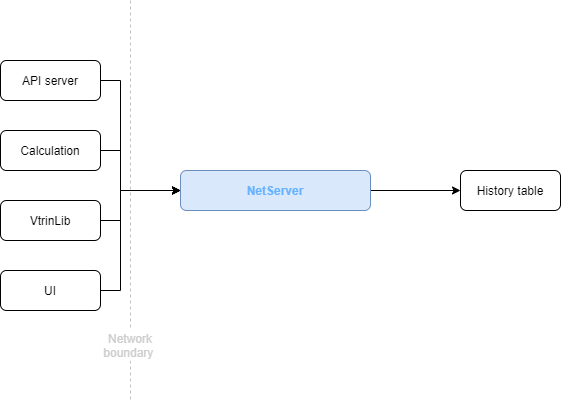
Arrows show the direction of dataflow.
Recollection
Recollection means collecting aggregated time series again for a time period, e.g. due to backfilled or maintained data. RTDB-Transformator is responsible for the recollection of past periods.
RTDB-Transformator is also responsible for cleaning up history tables that have aged out from the history scope
Updated 9 months ago